
Nuremberg, Germany, March 10, 2026 — At Embedded World 2026, a premier global event for embedded technologies, AutoCore and Qualcomm Technologies, Inc. officially showcased AutoRobo, a production-ready embodied robot solution, at the Qualcomm booth. Aimed at industrial, logistics, and service robot scenarios, the solution provides an integrated platform capability ranging from robot operating systems to algorithms and control, empowering the robotics industry to achieve large-scale deployment.
As the costs of core hardware such as sensors, computing chips, and motors continue to decline, robot forms like AGV/AMRs, autonomous mobile robots, and collaborative robotic arms are experiencing rapid growth. Based on AutoCore's self-developed production-grade software platform, AutoCore.OS (AC.OS), and combining its expertise in autonomous driving and robotics technologies, the AutoRobo solution builds a unified software architecture. This enables customers to rapidly construct robot systems in an "out-of-the-box" manner and achieve scalable deployment.
At the exhibition, the live demonstration of the robot equipped with the AutoRobo solution attracted significant attention from visitors. Guests stopped to watch and try out interactive experiences with the robot. The robot's smooth mobility and stable operation won widespread acclaim from the on-site audience. Many industry professionals showed strong interest in the practical implementation capabilities of the solution and engaged in in-depth discussions with the technical staff on site. During the event, the AutoRobo demonstration became one of the most popular interactive experiences at the Qualcomm booth, continuously drawing crowds for hands-on trials and inquiries.
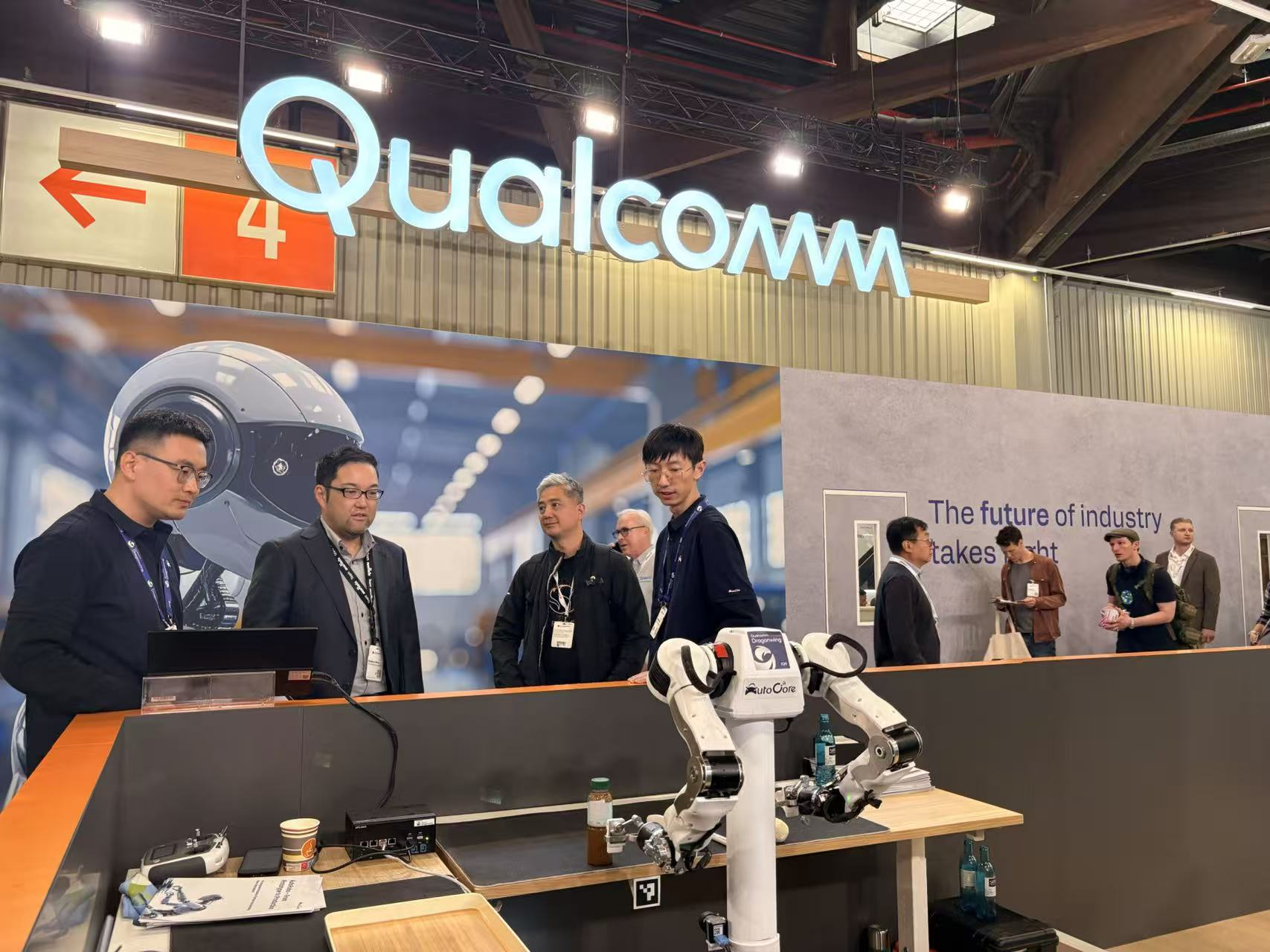
AutoRobo offers a hardware-software integrated robotics platform that supports various robot forms, including collaborative robotic arms, autonomous mobile robots (AMR/AGV), and composite robots. Through a unified software architecture and standardized technological foundation, enterprises can quickly build different robot applications on the same platform, significantly reducing development costs and system complexity.
Relying on the cross-scenario software platform capabilities of AutoCore.OS, this solution integrates a hybrid architecture of Linux and RTOS while maintaining compatibility with the ROS2 ecosystem, remarkably enhancing the real-time performance and stability of the robot system, providing an essential guarantee for the stable operation of robots in complex environments.
In AMR/AGV scenarios, AutoRobo's proprietary robot navigation algorithms, combined with the system-level optimization of AutoCore.OS, have built an autonomous navigation solution tailored for industrial-grade applications. The system supports multi-sensor inputs, including LiDAR, cameras, and IMUs, and provides comprehensive algorithm capabilities spanning perception, localization, and planning and control (PNC).
This solution can be widely applied in scenarios such as industrial manufacturing, warehousing and logistics, campus inspection, and commercial service robots. Examples include production line material handling, autonomous navigation forklifts, "goods-to-person" warehousing systems, commercial cleaning robots, and inspection robots.
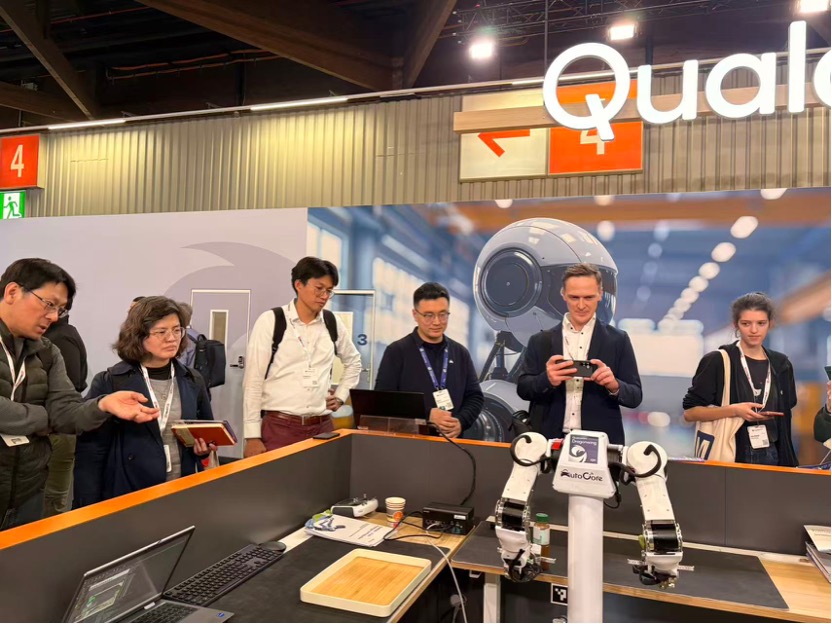
For collaborative robot and industrial robotic arm scenarios, AutoRobo provides high-precision control capabilities based on the EtherCAT real-time bus. It also supports the integration of traditional and VLA (Vision-Language-Action) robot motion planning with embodied AI technologies, achieving a further upgrade in robot operation and intelligent decision-making capabilities.
In terms of real-time control performance, the scheduling jitter of AutoRobo's EtherCAT master station averages 1.74 microseconds (5 slaves, 1kHz). The average time for the master station to send a frame to the slave is about 4 microseconds, and the average time to receive a frame from the slave is about 1.42 microseconds, fully meeting the high precision and high reliability control requirements of industrial manufacturing scenarios.
This solution can be widely used in smart factory automated production, precision assembly, loading and unloading, dispensing/gluing, welding, and warehousing automation.
AutoRobo's technical architecture is not only designed for current robot applications but also reserves space for the future development of Embodied AI. By combining robot navigation and operational control with Vision-Language-Action (VLA) model capabilities, the platform can progressively support higher levels of robot intelligence.
In terms of embodied AI capabilities, AutoRobo introduces the VLA (Vision-Language-Action) model, enabling robots to complete complex operational tasks through visual understanding and language instructions. This allows for more precise target recognition and grasping in complex environments, while demonstrating stronger generalization capabilities when dealing with different objects and tasks, thereby significantly enhancing the flexibility and adaptability of robots in practical application scenarios.
Centered around the practical deployment of large VLA models, AutoRobo also provides one-stop service capabilities ranging from data collection and data management to model fine-tuning and model deployment. By building a high-quality multi-modal data collection system and combining it with automated data processing and training pipelines, enterprises can more efficiently complete the development and iteration of embodied AI models. Currently, these models have been successfully adapted and optimized on the hardware acceleration platforms of several well-known leading chip companies, achieving efficient and stable edge inference capabilities.
In addition, the AutoRobo platform also supports VLM (Vision-Language Model) capabilities, allowing robots to understand natural language instructions and complete complex tasks in conjunction with visual information. For example, in industrial and service scenarios, robots can identify specified objects, understand environmental information, and execute corresponding operations based on language commands, providing a crucial technical foundation for smarter human-robot collaboration in the future.
By deeply integrating its self-developed robot operating system, real-time control, and navigation capabilities with VLA/VLM large model capabilities, AutoRobo has built a unified software platform tailored for the next generation of embodied AI robots.
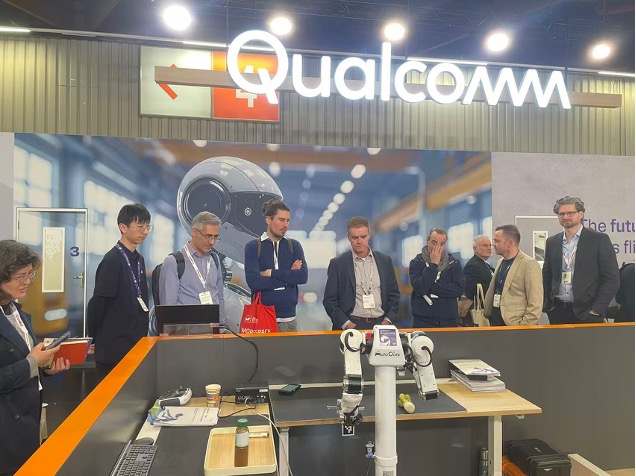
AutoCore stated that AutoRobo has been validated in autonomous driving and robot systems, demonstrating high reliability, scalable deployment, and production-grade stability. Through deep synergy with the Qualcomm platform, this solution can help customers rapidly build robotic products and accelerate the large-scale application of robotics technology in the industrial, logistics, and service sectors.
At Embedded World 2026, the embodied robot solution jointly showcased by both parties attracted the attention of numerous industry customers and partners, becoming a major highlight of the Qualcomm booth.